
Contact Info
16-Z-1, Madina Town, Near Bank Morr Susan Road, Faisalabad- Pakistan.
+92-300-9657744
khalil@vision.pk
Get StartedRecommended Services


Supported Scripts

Table of Contents
“What if the AI you thought was the best… was just the warm-up act?”
You know that feeling when you think you’ve found the best thing out there — the fastest car, the sharpest knife, the most powerful tool — and then someone quietly pulls a curtain and says, “Actually… meet this.”
That’s exactly what Anthropic just did with Claude Mythos.
While the tech world was busy debating GPT-5 features and arguing about model benchmarks on Reddit, Anthropic slipped something unprecedented into the world in early April 2026. No flashy keynote. No celebrity endorsements. Just a quiet, gated research preview that’s already making the cybersecurity and enterprise AI world go absolutely silent with awe.
Claude Mythos isn’t just an upgrade. It’s a whole new tier — sitting above Claude Opus in the hierarchy, engineered specifically for high-stakes reasoning, autonomous problem-solving, and cybersecurity tasks that would make previous AI models break a digital sweat.
And here’s the thing: most people haven’t even heard of it yet. You have. So let’s dig in.
1. What Exactly Is Claude Mythos?
Let’s start at the beginning — because Claude Mythos is genuinely unlike anything Anthropic has released before, and understanding why matters.
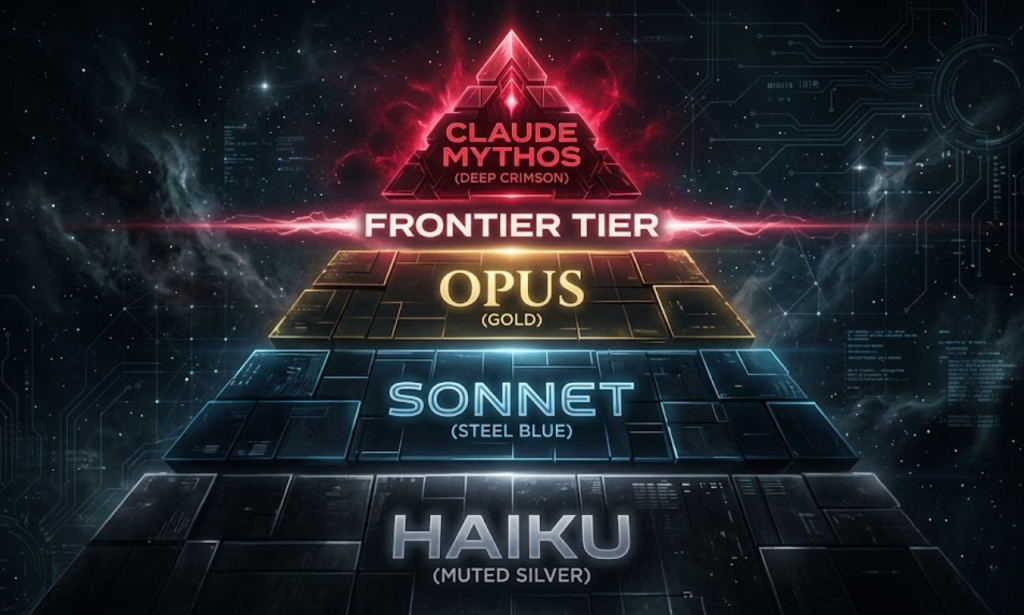
Claude Mythos is Anthropic’s next-generation frontier AI model. Think of it as the model that exists beyond the traditional Haiku → Sonnet → Opus ladder. It’s the fourth tier — a specialized “super-tier” — built for tasks where the stakes are too high, the complexity too deep, and the margin for error too slim for any previous model to handle reliably.
Released in early April 2026 as a Gated Research Preview, Claude Mythos is currently accessible only to select enterprise partners through Amazon Bedrock and Google Cloud Vertex AI. And the access is specifically scoped to defensive cybersecurity research. We’ll talk about why in a moment.
Here’s what makes Claude Mythos fundamentally different:
- It reasons at a level that feels less like AI and more like a seasoned expert — working through multi-step logic chains, self-correcting, and arriving at outputs that previous models simply couldn’t produce
- It understands multi-file codebases the way a senior engineer does — not just reading code line-by-line, but grasping architectural intent, dependency chains, and the why behind design decisions
- It can autonomously discover zero-day vulnerabilities — finding security flaws in software that no one has found before, which is why Anthropic is being extremely careful about who gets access
The name “Mythos” is telling. Myths are stories of extraordinary power — forces that operate on a different plane. Claude Mythos, whether intentionally named or not, lives up to that framing.
2. How Does Claude Mythos Compare to Previous Claude Models?
Alright, let’s get practical. You’ve probably used Claude 3.5 or maybe Claude 3.7. Maybe you’re running your business workflows, content pipelines, or coding projects on Opus. So how does Claude Mythos stack up?
The honest answer is: it’s not even the same sport.
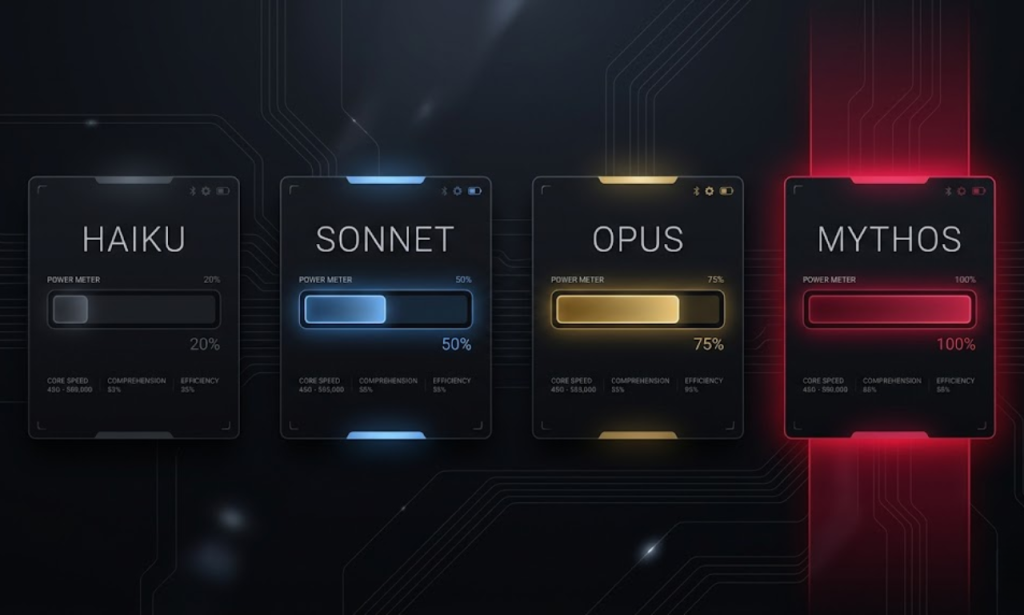
Claude Mythos vs. Claude Opus vs. Claude 3.5 — Side-by-Side
| Feature | Claude 3.5 Sonnet | Claude Opus | Claude Mythos |
|---|---|---|---|
| Tier | Mid-range flagship | High-end general | Frontier super-tier |
| Coding Ability | Strong | Excellent | Generational leap |
| Multi-file Architecture Understanding | Limited | Moderate | Deep & autonomous |
| Zero-day Vulnerability Discovery | Not capable | Limited | Core capability |
| Extended Thinking Mode | Available | Available | Enhanced & longer |
| Context Window | 200K tokens | 200K tokens | Optimized for massive datasets |
| Agentic Workflows | Supported | Supported | Natively built for it |
| Public Access | Yes | Yes | Gated Research Preview only |
| Deployment | API, Claude.ai | API, Claude.ai | Amazon Bedrock, Vertex AI |
| Primary Use Case | General enterprise | Complex reasoning | Cybersecurity, extreme reasoning |
The phrase Anthropic themselves used in early documentation about Claude Mythos is “generational leap” — and that’s not marketing hyperbole. In benchmark testing, Claude Mythos demonstrated capabilities in understanding complex multi-file software architectures and identifying critical vulnerabilities that caused previous models to either fail completely or produce incorrect analyses.
For context: when Claude 3.5 Sonnet launched, people called it a significant upgrade. Claude Mythos is operating on a different altitude altogether.
3. Project Glasswing: The Secret Coalition Behind Claude Mythos
Now here’s where Claude Mythos gets genuinely cinematic.
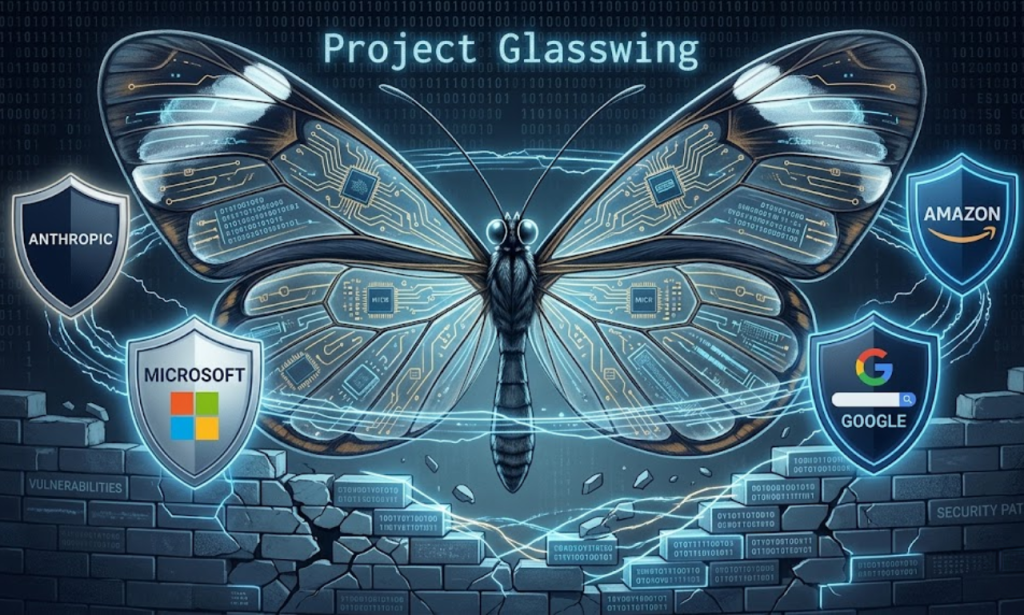
Meet Project Glasswing — a defensive cybersecurity coalition involving four of the biggest names in tech: Anthropic, Amazon, Microsoft, and Google. The purpose? To use Claude Mythos’s extraordinary vulnerability-detection capabilities to proactively find and patch critical software flaws before malicious actors can exploit them.
Think of it like this: imagine you have a locksmith so skilled, so fast, so perceptive that they can walk through a building and identify every weak point in every lock — before any burglar even knows the building exists. Then they fix all those weaknesses before anyone can exploit them.
That’s Project Glasswing. And Claude Mythos is that locksmith.
Here’s why this matters enormously:
- Zero-day vulnerabilities are the most dangerous class of security flaw — they’re bugs no one knows about, which means no patches exist, which means attackers can exploit them freely until someone finds them
- Traditionally, finding zero-days requires highly skilled human researchers spending months on a single codebase
- Claude Mythos can perform this analysis at machine speed, across massive codebases, with a depth of architectural understanding that’s genuinely unprecedented in AI
The name “Glasswing” is itself meaningful — the Glasswing butterfly has transparent wings, making it nearly invisible to predators. The metaphor: Claude Mythos operates in the shadows of your codebase, invisibly finding threats before they become attacks.
This is why major cloud providers are involved. AWS and Google Cloud aren’t just hosting Claude Mythos — they’re partners in the defensive mission, integrating Claude Mythos’s capabilities into their own security frameworks.
4. Agentic Reasoning & Extended Thinking — What Does It Actually Mean for Real Work?
Let me be honest with you: “agentic AI” and “extended thinking” are phrases that get thrown around a lot and mean very little until you see them in action.
So let me give you a real picture of what Claude Mythos actually does when these capabilities are activated.
Extended Thinking in Claude Mythos
Earlier Claude models introduced an “Extended Thinking” mode — essentially giving the model more internal computation time to reason through a problem before responding. Claude Mythos takes this to a new level.
Where previous models might reason for a few internal steps before answering, Claude Mythos can sustain coherent chains of logic across far longer reasoning sequences. It self-checks. It backtracks when it detects an error. It considers alternative interpretations before committing to an answer.
The result? Outputs that feel less like an AI autocompleting text and more like a thoughtful expert delivering a considered opinion.
For long-form legal documents, scientific papers, and complex technical specifications, Claude Mythos maintains context and coherence in ways that earlier models couldn’t sustain — losing the thread halfway through was a real limitation that Claude Mythos largely eliminates.
Agentic Workflows: Claude Mythos as an Autonomous Worker
This is where things get practically interesting for businesses and developers.
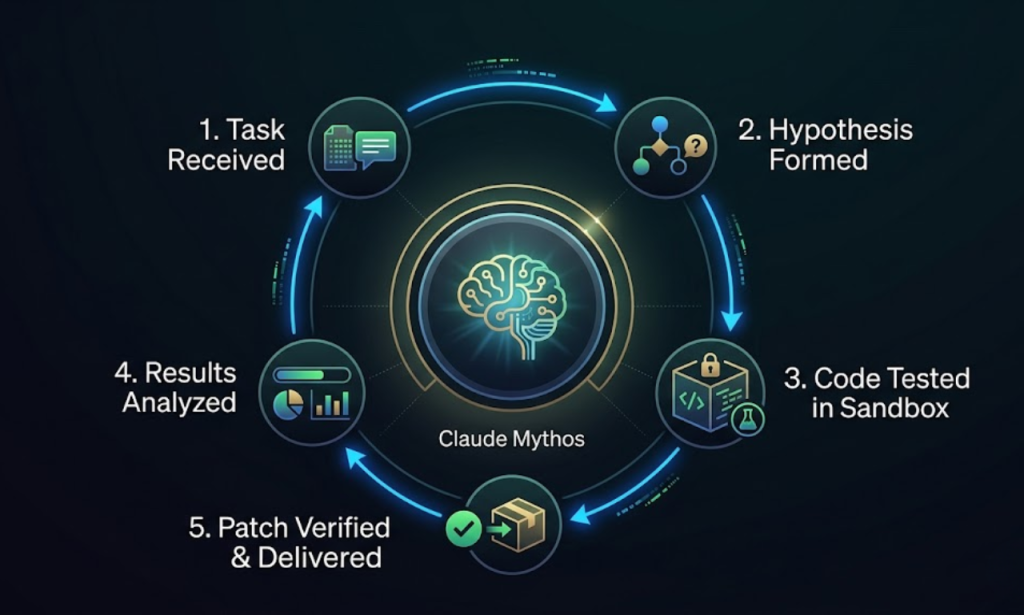
“Agentic” means Claude Mythos can operate as an autonomous agent — not just answering questions, but actually doing things in a sequence:
- Receive a complex task (e.g., “Find and fix the security vulnerability in this codebase”)
- Form a hypothesis about where the problem might exist
- Test code in a sandboxed environment
- Analyze the result — did the fix work? Did it introduce new issues?
- Iterate until the solution is verified
- Deliver a report explaining what was found, what was done, and why
When deployed within environments like Claude Code, Claude Mythos can execute this entire loop autonomously. You hand it a problem. It solves it. That’s not science fiction — that’s what the current gated preview is demonstrating.
For developers, this means Claude Mythos isn’t just a better autocomplete. It’s a junior-to-mid-level engineer you can assign tasks to.
5. Why Is Anthropic Restricting Access to Claude Mythos?
Here’s the uncomfortable truth that Anthropic deserves credit for being honest about: Claude Mythos is potentially too powerful for unrestricted public access right now.
The primary concern is something called cybersecurity uplift — the ability of an AI model to meaningfully increase someone’s capacity to find and exploit security vulnerabilities. Every powerful tool can be used offensively as well as defensively.
Claude Mythos can find zero-day bugs. In the wrong hands, that’s not a security asset — it’s a weapon.
Anthropic’s response to this isn’t to not build it (that ship has sailed — the capability exists whether Anthropic deploys it or not). Instead, they’ve taken a structured approach:
The Frontier Compliance Framework
Claude Mythos is trained under Anthropic’s Frontier Compliance Framework — a Constitutional AI approach that:
- Builds in hard limits around assisting with offensive exploitation of vulnerabilities
- Trains the model to recognize and refuse requests that would constitute genuine cybersecurity uplift for malicious actors
- Maintains extensive audit logging for enterprise deployments
However, Anthropic openly acknowledges that no safety framework is perfect. The “uplift potential” of Claude Mythos remains the primary safety concern — hence the gated access, the enterprise-only deployment, and the defensive-use-case restriction.
This is, frankly, responsible behavior from a frontier AI lab. They built something extraordinary, recognized it could be misused, and implemented real constraints rather than just shipping it for the revenue.
How Does Access Actually Work?
| Access Path | Status | Who Qualifies |
|---|---|---|
| Amazon Bedrock Private Preview | Active | Enterprise partners approved by Anthropic |
| Google Cloud Vertex AI Preview | Active | Enterprise partners approved by Anthropic |
| Claude.ai Public | Not available | N/A |
| Standard API | Not available | N/A |
| Claude Code | Limited preview | Select research institutions |
If you’re not an enterprise partner with a specific defensive cybersecurity use case, you’re not getting access to Claude Mythos today. Full stop. And honestly, that’s fine — the models that are publicly available (including Opus) are still extraordinary tools for the vast majority of business and development needs.
6. How Claude Mythos Impacts Businesses, Developers & Freelancers
Let’s bring this down from the stratosphere of frontier AI research and talk about what Claude Mythos actually means for you — whether you’re a factory owner, a freelancer, a developer, or someone building an online store.
For Business Owners & Factory Operators
You might be thinking: “I’m not a cybersecurity researcher. Why should I care about Claude Mythos?”
Fair question. Here’s your answer: the ripple effects of Claude Mythos will reach your business whether you notice them or not.
Every piece of enterprise software you use — your ERP, your inventory system, your payment gateway — is built on codebases that contain vulnerabilities. Project Glasswing and Claude Mythos’s defensive work is systematically reducing the attack surface of the software ecosystem you depend on.
Less directly: the agentic, autonomous reasoning capabilities pioneered in Claude Mythos will cascade into publicly available models within 12–18 months. The Claude you use in your workflows next year will be meaningfully smarter because of what Claude Mythos is demonstrating today.
For Developers & WordPress Teams
This is where it gets immediately exciting.
If Claude Mythos’s agentic capabilities for code — finding bugs, proposing patches, verifying fixes autonomously — become available in developer tools, you’re looking at:
- Dramatically accelerated code review — what takes a senior developer half a day could be flagged and fixed in minutes
- Multi-file architecture understanding — no more AI tools that lose the thread when you paste in more than one file
- Autonomous debugging loops — describe a bug, let the agent reproduce it, propose a fix, and verify it
For WordPress developers specifically, imagine an AI agent that can audit your entire plugin ecosystem for security vulnerabilities, identify conflicting dependencies, and propose fixes — autonomously, overnight, without billing hours.
That future is closer than you think.
For Freelancers & Online Store Builders
The AI landscape is shifting fast. Understanding Claude Mythos and the frontier models tells you where the tools you use daily are heading. If you’re building client websites, managing Shopify stores, or selling services in the digital space, staying ahead of this curve is a competitive advantage.
The question isn’t whether AI like Claude Mythos will reshape your work. It already is, indirectly. The question is whether you’re positioned to use that shift as leverage — or get left behind scrambling.
Are you building something online and not sure where to start? The team at Vision.pk has been helping businesses like yours build powerful, AI-ready digital infrastructure. Let’s talk.
7. Frequently Asked Questions About Claude Mythos
What is Claude Mythos?
Claude Mythos is Anthropic’s next-generation frontier AI model — a tier above Claude Opus — engineered for advanced reasoning, autonomous problem-solving, and defensive cybersecurity research. It was released as a Gated Research Preview in April 2026.
How can I access Claude Mythos?
Currently, Claude Mythos is available only through gated enterprise programs via Amazon Bedrock and Google Cloud Vertex AI, restricted to approved partners with defensive cybersecurity use cases. There is no public API or Claude.ai access at this time.
Is Claude Mythos better at coding than Claude 3.5 or Opus?
Significantly, yes. Benchmark data indicates Claude Mythos represents a “generational leap” in coding capability — particularly in understanding multi-file architectures, identifying zero-day vulnerabilities, and performing complex debugging that previous models failed to resolve.
What is Project Glasswing?
Project Glasswing is a defensive cybersecurity coalition involving Anthropic, Amazon, Microsoft, and Google. It uses Mythos’s vulnerability-detection capabilities to proactively find and patch critical software flaws before they can be exploited by malicious actors.
Why is Anthropic restricting public access to Mythos?
Because Mythos is capable of significant cybersecurity uplift — it can find zero-day vulnerabilities with a sophistication that poses genuine risk if misused. Anthropic has chosen a gated, enterprise-only, defensive-use-only approach until additional safety guardrails are in place.
Does Claude Mythos support Extended Thinking?
Yes. Mythos builds significantly upon the Extended Thinking mode introduced in earlier 2026 models, allowing for longer, more coherent reasoning chains with robust self-correction before delivering a final output.
What is the context window of Claude Mythos?
While exact figures vary by deployment provider, Mythos is optimized to maintain high coherence across massive datasets — effectively handling long-form legal, scientific, and technical documents without losing contextual thread.
Is Claude Mythos a replacement for Claude Opus?
Not exactly. Claude Mythos is a specialized “frontier super-tier” for extreme reasoning and enterprise security tasks. Claude Opus remains the flagship for general-purpose high-end work. They serve different (though overlapping) roles.
Can Claude Mythos autonomously fix bugs?
Yes. When deployed in agentic environments like Claude Code, Mythos can form a hypothesis about a bug, test a fix in a sandbox, analyze results, iterate, and verify a patch — entirely autonomously.
How does Claude Mythos handle AI Safety?
Mythos is trained under Anthropic’s Frontier Compliance Framework, which includes Constitutional AI training designed to prevent offensive misuse. However, Anthropic acknowledges that its “uplift potential” remains the primary active safety concern — which is precisely why access is so tightly restricted.
8. How Vision.pk Can Help You Build AI-Ready Digital Infrastructure
Here’s the honest truth: most businesses in Pakistan — and globally — are not AI-ready.
Their websites are slow. Their backends are fragile. Their digital presence doesn’t reflect the ambition of the people running the business. And as AI tools like Claude Mythos push the frontier of what’s possible, the gap between businesses with strong digital infrastructure and those without is only going to widen.
That’s where Vision.pk comes in.
Vision.pk is a full-service digital development company specializing in WordPress development — and not the generic, template-copy kind. We’re talking about custom-built, performance-optimized, conversion-focused websites and web applications that are ready to grow with your business as the digital landscape evolves.
Here’s what we bring to the table:
WordPress Development That Actually Performs
- Custom WordPress themes & plugins — built from scratch, not assembled from $15 templates
- WooCommerce online store development — for business owners, factory operators, and entrepreneurs who want to sell online without the technical headaches
- Performance optimization — fast-loading sites that rank on Google and don’t lose customers to frustration
- Security hardening — because in an era where Mythos is revealing just how many vulnerabilities exist in software, your website security isn’t optional
Domain, Hosting & Full-Stack Solutions
- Domain registration guidance for freelancers, Shopify partners, and businesses
- Hosting setup optimized for WordPress performance
- End-to-end web project management — from wireframe to launch
AI-Ready Development
The world is moving toward AI-integrated workflows. Our development approach ensures your digital infrastructure is built on clean, well-structured code that integrates with AI tools, APIs, and automation pipelines — not against them.
Whether you’re a factory owner who wants an online ordering system, a freelancer who needs a professional portfolio, a startup that wants a custom web app, or an enterprise looking to modernize its digital presence — Vision.pk has built it before and can build it for you.
📞 Ready to build something that lasts? Contact Vision.pk now.
💬 Click Here to Contact Vision.pk on WhatsApp
Response within hours. No obligation. Just a conversation about what you need.
9. Conclusion: Claude Mythos Is the Future, Arriving Early
Let’s bring it all home.
Claude Mythos represents something genuinely significant — not just in the technical sense, but in what it signals about where artificial intelligence is actually going.
We are entering an era where AI doesn’t just assist human experts — it becomes one. Mythos can reason through problems autonomously, find vulnerabilities that human researchers might miss, and iterate toward solutions without holding your hand every step of the way.
That’s not science fiction. That’s April 2026.
The fact that Anthropic is being careful — restricting access, building safety frameworks, partnering with major cloud providers for controlled deployment — is actually the most encouraging part of this story. It suggests that the people building the most powerful AI tools are taking the responsibility seriously.
What should you take away from all of this?
First: Stay informed. Mythos is a preview of where publicly available AI tools are heading within the next 12–24 months. The businesses and developers who understand this curve will move faster and smarter than those who don’t.
Second: Get your digital foundations right now — before the curve hits. A slow, insecure, poorly built website is a liability in any environment. In an AI-accelerated world, it’s a competitive death sentence.
Third: Don’t try to figure out the technical stuff alone. That’s what experts are for.
The Internet Is Moving Fast. Your Business Should Too.
If you’re serious about building something online that actually works — a real business, a real store, a real digital presence — the team at Vision.pk is ready to make it happen.
We’ve helped factory owners move online, freelancers build credibility, and startups launch faster than they thought possible. WordPress development, WooCommerce stores, custom web solutions — all of it, done properly, with people who actually care about the outcome.
🚀 Don’t Wait Until Your Competitors Are Already Ahead
Contact Vision.pk right now and let’s talk about what you need.
Free consultation. No jargon. Just results.
External Resources & References
- Anthropic Research Blog — Official Anthropic publications on model development and safety
- Amazon Bedrock Documentation — Enterprise AI deployment via AWS
- Google Cloud Vertex AI — AI model hosting and enterprise deployment
- Claude Documentation — Official Claude API and model documentation
- NIST Cybersecurity Framework — Reference framework for enterprise cybersecurity